



When Surya Dev enters Makar rashi and Uttarayan begins, Deoghar celebrates Til Sankranti. Baba Baidyanath is offered til first, devotees bring dahi-chura, and the season that leads up to Baba's wedding begins. Here is everything you need to plan your darshan at Baba Dham for Makar Sankranti 2027.
- Makar Sankranti 2027: Friday, 15 January 2027
- Surya enters Makar: about 9:14 PM IST, Thursday 14 January
- Maha Punya Kaal (New Delhi): about 7:15 to 9:01 AM, 15 January
What Makar Sankranti means
Makar Sankranti is the day Surya Dev moves into Makar rashi (Capricorn). It marks the start of Uttarayan, the Sun's northward journey, which the shastras call the day of the devtas. It is one of the few Hindu festivals that follows the solar calendar, which is why it falls on nearly the same date every year.
The day also ends Kharmas, the month in which weddings and other shubh karya are paused. From Makar Sankranti onwards, auspicious work begins again. In the Mahabharata, Bhishma Pitamah waited on his bed of arrows for Uttarayan before leaving his body, which shows how sacred this turning point is.
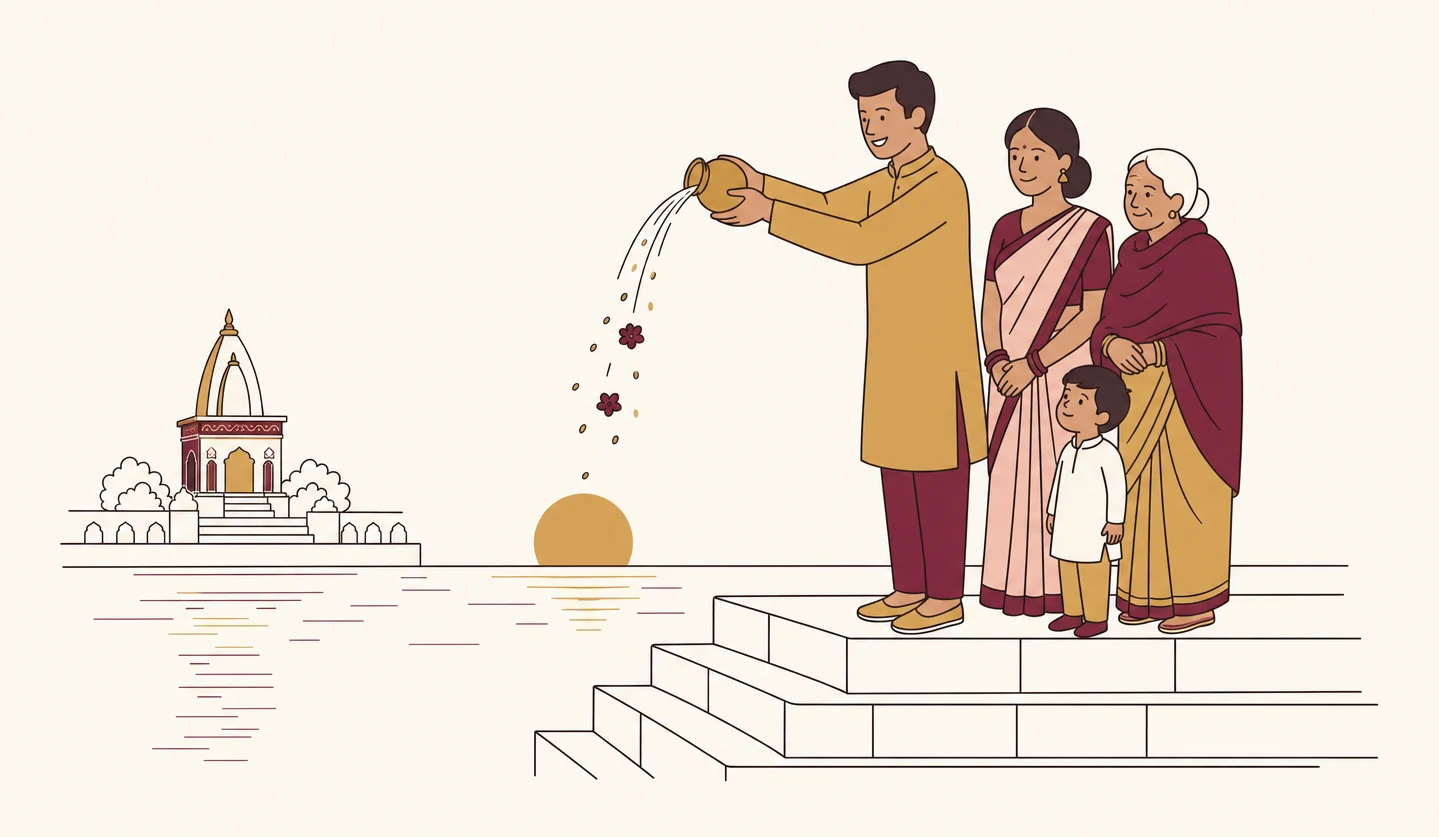
Three things make up the day for most families:
- Snan: a holy bath at dawn during the Punya Kaal, before going for Baba's darshan.
- Surya arghya: offering water to the rising Sun with til, red flowers and akshat.
- Daan: giving til, gud, chura, blankets and warm clothes. Daan on this day is said to bring many times the punya.
Makar Sankranti 2027: date and Punya Kaal
In 2027 the Sun enters Makar rashi at about 9:14 PM IST on Thursday, 14 January. Because this happens after sunset, the Punya Kaal and all snan, daan and puja move to the daylight hours of Friday, 15 January 2027.
| Detail | Timing (approximate) |
|---|---|
| Surya enters Makar rashi | 9:14 PM IST, Thursday 14 January 2027 |
| Makar Sankranti observed | Friday, 15 January 2027 |
| Punya Kaal (New Delhi) | 7:15 AM to 5:46 PM, 15 January |
| Maha Punya Kaal (New Delhi) | 7:15 AM to 9:01 AM, 15 January |
| Deoghar | Punya Kaal starts at local sunrise, which is earlier than in Delhi |
The Sankranti moment is the same everywhere in India, but the Punya Kaal depends on local sunrise and sunset. Confirm the exact Deoghar timings with your pandit or a local panchang closer to the date.
Til Sankranti at Baba Dham
In Jharkhand, Bihar and Mithila, Makar Sankranti is known as Til Sankranti or Dahi-Chura Sankranti, and Baba Baidyanath Dham is at the heart of it. Here is how the day unfolds at the temple.
Early morning: the Sardar Panda's puja and til to Baba
After the first puja of the day by the Sardar Panda, til is offered to Baba Baidyanath. This offering marks the start of the festival at the temple.
Through the day: jalabhishek and dahi-chura bhog
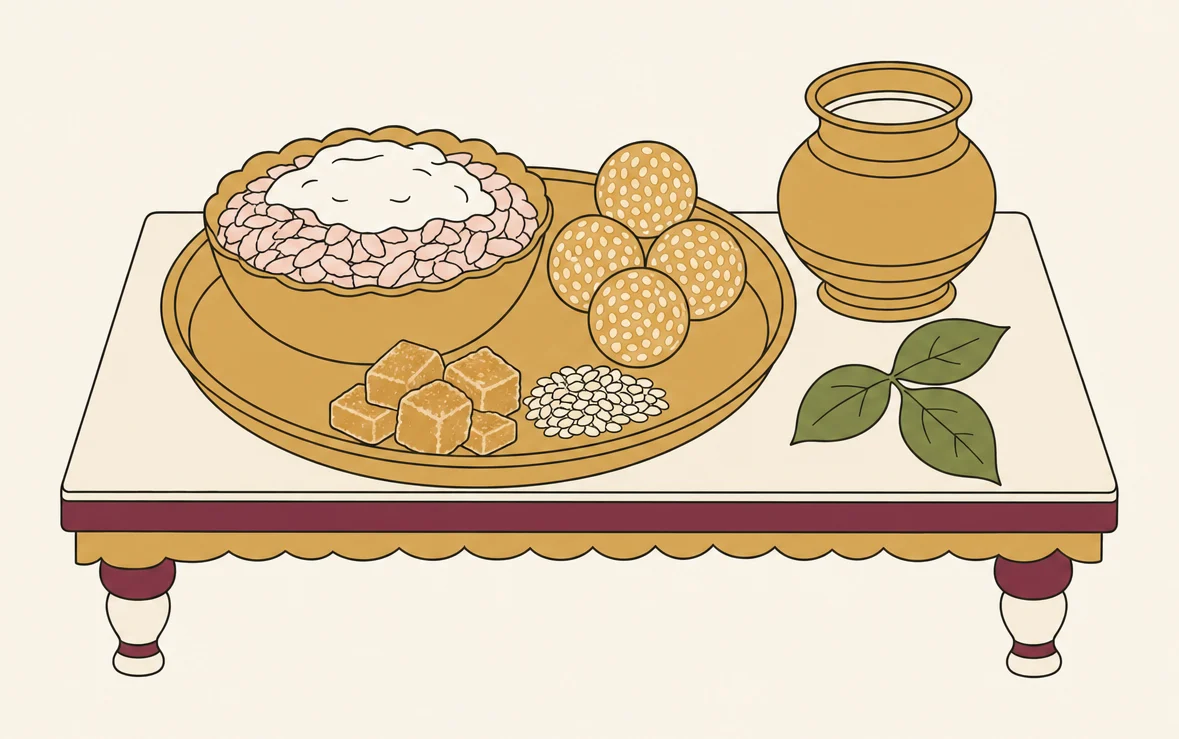
Devotees offer jal, bel patra, dahi-chura and til laddoo to the Jyotirlinga. Families from Bihar and Jharkhand often arrive in groups, and queues form from before sunrise.
After darshan: daan and prasad
Til, gud, chura and blankets are given as daan near the temple. Dahi-chura with til laddoo is the traditional prasad of the day.
Sankranti to Basant Panchami: the season of Baba's wedding begins
With Kharmas over, the rush at Baba Dham builds from Makar Sankranti and continues till Basant Panchami, when devotees from Mithila perform Baba's Tilak ahead of Mahashivratri on 6 March 2027 (see our Mahashivratri 2027 at Baba Dham guide).
A simple Makar Sankranti puja vidhi
- Snan: bathe at sunrise during the Punya Kaal. Add a little Ganga jal and til to your bath water.
- Surya arghya: offer water from a copper lota with til, red flowers and akshat to the rising Sun while chanting Om Suryaya Namah.
- Baba's darshan: offer jal, bel patra, til and dahi-chura to Baba Baidyanath, and visit Mata Parvati's temple in the same complex.
- Daan: give til, gud, chura, blankets or warm clothes to those in need, or to Brahmins at the temple.
- Prasad: have dahi-chura with til laddoo, and share til-gud with family and friends.
Planning your darshan: practical tips
- Arrive on 14 January: the Punya Kaal starts at sunrise on 15 January, so reach Deoghar the evening before and stay till 16 January.
- Book your stay early: Makar Sankranti brings very large crowds to Deoghar, and rooms near the temple fill up quickly.
- Plan your pass early: darshan passes at Baba Dham are issued offline, at the temple counter, and on festival days the counter queue is long. Our representative collects the pass at the counter for you before you arrive. Read how the VIP pass really works.
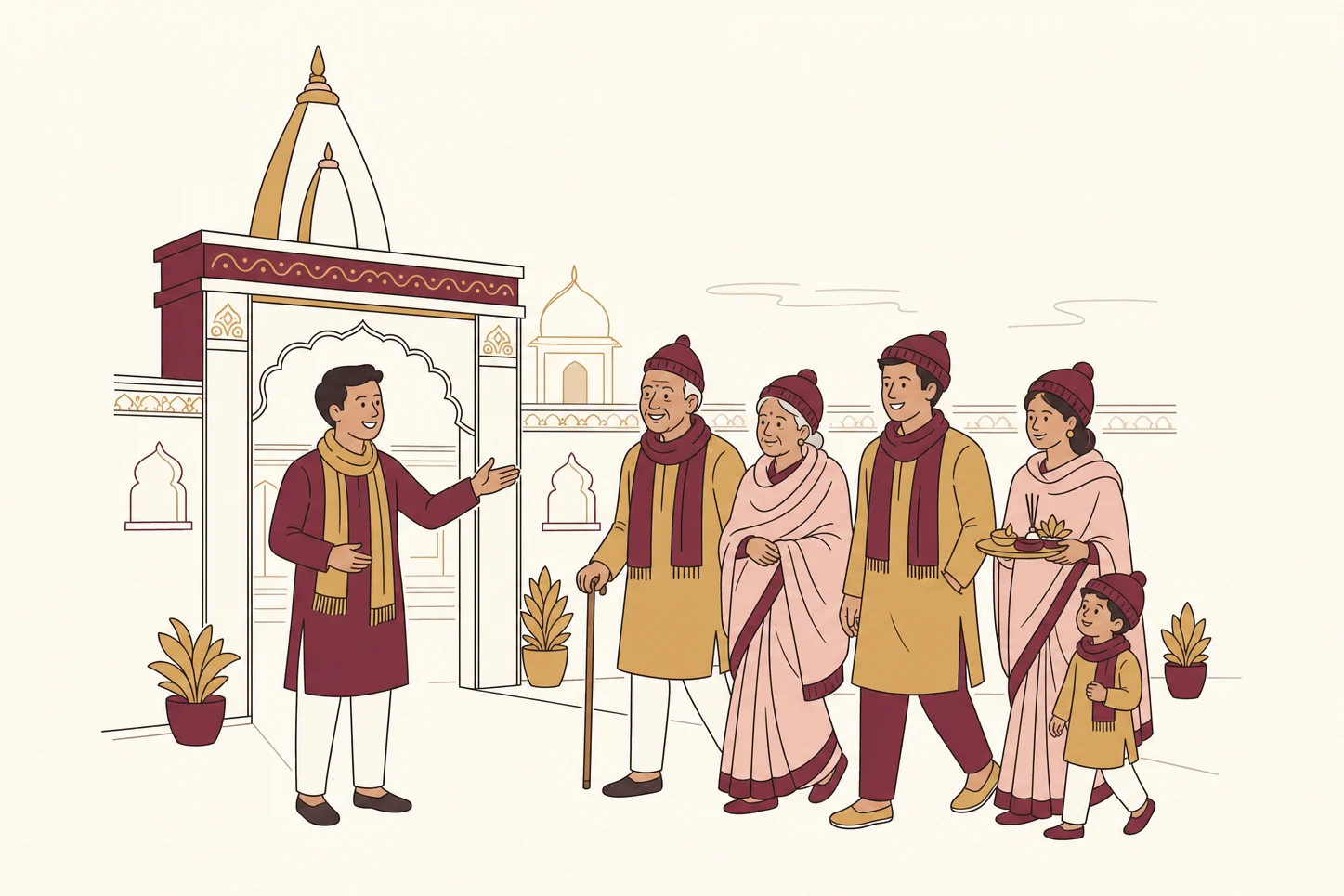
- Dress for the cold: January mornings in Deoghar are chilly. Carry a shawl you can take off easily inside the temple, and leave leather items behind.
- Keep buffer time for fog: trains and flights in North and East India are often delayed by fog in January.
- Add Basukinath Dham: many devotees complete their yatra with darshan at Basukinath, about 40 to 45 km away. Plan it for 16 January.
How to reach Deoghar
- By air: Deoghar Airport (DGH) is about 12 km from the temple, with flights from Delhi, Kolkata and other cities. Patna and Ranchi are other options with onward road travel.
- By train: Jasidih Junction, about 8 km away, is the main railhead on the Howrah–Delhi line. Baidyanath Dham station is closest to the temple and is connected via Jasidih.
- By road: Deoghar is well connected by road to Patna, Ranchi, Kolkata, Bhagalpur, Dhanbad and Dumka.
See how to reach Deoghar for trains, flights and roads in detail.
What MandirMay arranges for Makar Sankranti
MandirMay is an independent travel and arrangements company. We are not the temple and not part of the Mandir Trust. For Makar Sankranti at Baba Dham we can arrange:
- Darshan pass collection: our representative queues at the temple counter early and collects your pass, with jal, flowers and bel patra ready when you arrive. See the VIP darshan pass page for what it includes.
- Pujas by our own pandits: Rudrabhishek, Sankalp and Gathbandhan puja, with samagri arranged. If your family already has a panda at Baba Dham, tell us and we will work around your arrangement.
- Hotels near the temple: stays our team has visited, close to Baba Dham, booked before the Sankranti rush.
- Cabs and the Basukinath trip: airport and station pickups, local travel and the Basukinath round trip.
Prices are shown on the Baidyanath Dham page before you pay, or start with a ready-made Deoghar trip. Questions first? Call or WhatsApp us on +91 89689 50252.
Frequently asked questions
When is Makar Sankranti 2027?
The Sun enters Makar rashi at about 9:14 PM IST on Thursday, 14 January 2027. Because this is after sunset, Makar Sankranti and its Punya Kaal are observed on Friday, 15 January 2027.
What is the Punya Kaal on Makar Sankranti 2027?
The Punya Kaal begins at sunrise on 15 January 2027. For New Delhi it runs approximately from 7:15 AM to 5:46 PM, and the Maha Punya Kaal is approximately 7:15 AM to 9:01 AM. Sunrise is earlier in Deoghar, so confirm local timings with your pandit or a Deoghar panchang.
What is offered to Baba Baidyanath on Makar Sankranti?
Makar Sankranti is celebrated as Til Sankranti at Deoghar. After the first puja by the Sardar Panda, til is offered to Baba Baidyanath, and devotees offer jal, bel patra, dahi-chura and til laddoo through the day.
Is Baidyanath Dham crowded on Makar Sankranti?
Yes. Very large numbers of devotees, many from Bihar and Jharkhand, visit Baba Dham on Makar Sankranti, and the rush continues till Basant Panchami. Go early in the morning, and have your darshan pass collected at the counter in advance.
Should I visit Basukinath after Baba Baidyanath Dham?
Many devotees complete their yatra with darshan at Basukinath Dham, about 40 to 45 km from Deoghar. It can be covered by cab on the same day or the day after Makar Sankranti.
Can MandirMay arrange darshan and stay for Makar Sankranti 2027?
Yes. MandirMay arranges darshan pass collection, pujas by our own pandits, hotels near the temple and cabs in Deoghar. Book early for 14 to 16 January.
Begin Uttarayan with Baba's blessings. Plan your darshan, stay and travel for 15 January 2027 on our Baidyanath Dham page. Celebrating in Varanasi instead? See Makar Sankranti 2027 in Kashi.
Timings are approximate and based on standard panchang calculations. Temple schedules and crowd arrangements are set by the temple administration each year.